

In the middle of 2025, I drove to a quiet suburban street in the Midlands to inspect a early 1980’s Ford Fiesta that had been offered in part exchange.
January 2026
On the face of it, it wasn’t a car we’d normally consider, but the way the market for 1980s and 1990s cars have been moving made it worth a look.
Early hot hatches, particularly those presented as low-mileage or unusually original, are now commanding real money. Inspection and valuation is part of our business, and after the preliminary chat – I had questions.
This particular Fiesta had been bought not long before, with a claimed milage of just under 40k miles. By the time I left, it was clear that my decision to inspect it had been right. That visit neatly summed up what valuing cars from this era looks like today, and why experience matters more than ever.
Why Valuing 80s and 90s Cars Has Become More Nuanced
For years, cars from the 1980s and 1990s sat in a grey area. They were usable, affordable, and often overlooked. That has changed. As demand has increased, so has scrutiny. Buyers now want cars with believable mileage, consistent history, and a sense that what they’re being told matches what’s in front of them.
At the same time, values have risen sharply for the right examples. Certain models from the era have seen significant increases in a relatively short space of time, which naturally draws more people into the market. That’s no bad thing, but it does mean that not every car wearing a strong price tag genuinely deserves it. The gap between a good car and a questionable one is now far wider than it used to be.
What the Paperwork Didn’t Quite Explain
When I arrived to see the car, the first thing I did was go through the paperwork. There was a gap in the MOT history, which doesn’t automatically mean a problem, but it does mean you need to pay attention to everything else. Mileage claims live or die on continuity. Without it, the car itself has to do more of the talking.
I’d already seen photographs of the interior and the foot pedals, and even then they looked more worn than I’d expect for a sub-40,000-mile car. Once I opened the driver’s door, that impression was confirmed. The pedal wear was heavy, and the steering wheel polished where hands had been placed, the sort you see on a car that’s lived a longer life than the odometer suggests.
Reading the Car Properly
While I was looking at the pedals, I noticed a small flake of paint missing from the driver’s door hinge. Under the top coat was the original factory blue paint. I checked the passenger door and found a different colour again beneath the paint. That’s not uncommon on older cars, but when originality is central to the value, it becomes extremely relevant.
Under the bonnet, the chassis plate on the inner wing appeared to have been riveted in place fairly recently. The VIN plate inside the driver footwell looked genuine enough, but the body shell around it was not the same, as the surrounding panels. These aren’t dramatic discoveries on their own, but valuing an 80s or 90s car is about joining the dots, not reacting to a single detail.
When the Story Comes Together
Walking around the car, I noticed that every pane of glass carried a different registration number etched. In the boot, the shell beneath the trim was white again. At that point, the picture was fairly clear. This wasn’t a single, original Fiesta that had led a quiet life. It was almost certainly made up of four or five different cars.
There’s nothing inherently wrong with that if it’s understood and priced accordingly. But it cannot be valued in the same way as a genuinely original, low-mileage example with a coherent history. In my view, that car sat closer to £6,000–£8,000 than the £20k-plus figure it had previously achieved. We didn’t do a deal, and as far as I’m aware, the owner has kept it and enjoyed it, which is exactly what it should be used for.
What This Tells Us About Valuing 1980s and 1990s Cars Today
This inspection reinforced something I see more and more. Rising values don’t lift every car equally. As 80s and 90s cars become collectable, the market rewards honesty, originality, and consistency. Cars that don’t stack up are quickly exposed once you slow down and really look at them.
Valuing cars from this era isn’t about chasing trends or relying on headline prices. It’s about understanding how these cars were built, how they age, where they’re commonly altered, and how to read what’s in front of you. Do that properly, and you can still buy well. Skip that step, and it’s very easy to overpay simply because the market feels buoyant.
Disclaimer
This article is provided for informational and illustrative purposes only. The content reflects the author’s professional opinion and does not constitute formal advice, a valuation, or a guarantee of value.
Any price ranges, observations, or conclusions are illustrative only. Individual vehicles may vary significantly, and no reliance should be placed on this content for financial or transactional decisions.
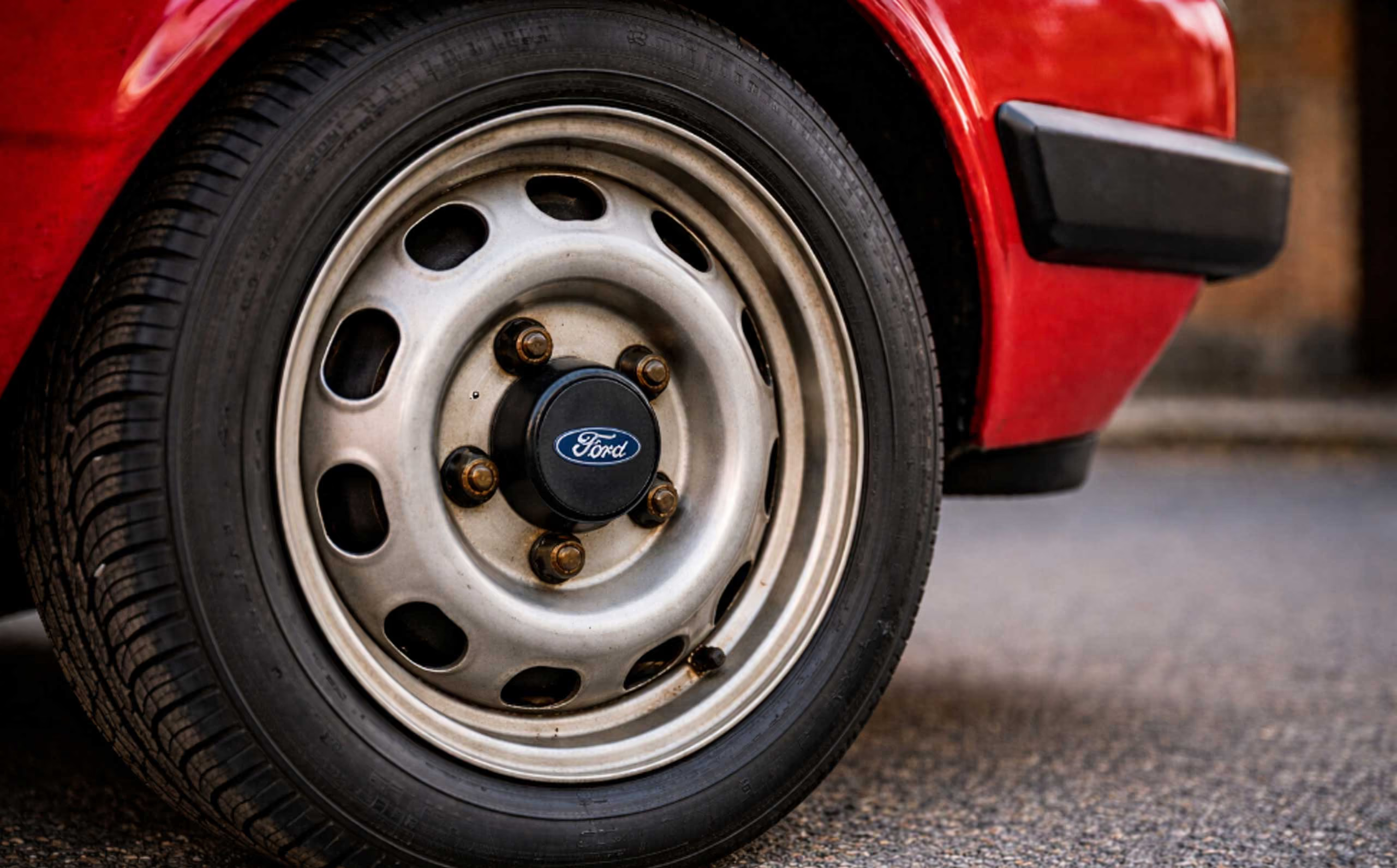
The image used in this article is AI-generated for illustrative purposes and does not depict any actual car.
For formal inspections or valuations, please refer to our Terms & Conditions and professional services.